You search for tape suppliers in China, but you often get products that are just average. This wastes your time and money. You need to know if you are talking to the real experts or just a middleman with good English.
To find the best adhesive tapes, you must connect with the "core supply chain1." These are the manufacturers who survived China's fierce domestic market competition. They possess the best technology and resources, which is far more important than just having a salesperson who speaks fluent English.

Many buyers think they found a factory, but they actually found a trader. I want to tell you a story about the real experts in this industry. It will change how you source your products.
Who are the true masters of the Chinese tape industry?
You see thousands of suppliers on Alibaba, and you think they are all the same. But most of them are not the true leaders of the industry. You are likely missing the most capable partners.
The true masters are the domestic veterans2, usually aged 35 to 40. They grew up during the golden age of Chinese manufacturing. They served high-demand industries3 like automotive and electronics, and they hold the real technical power in the supply chain.
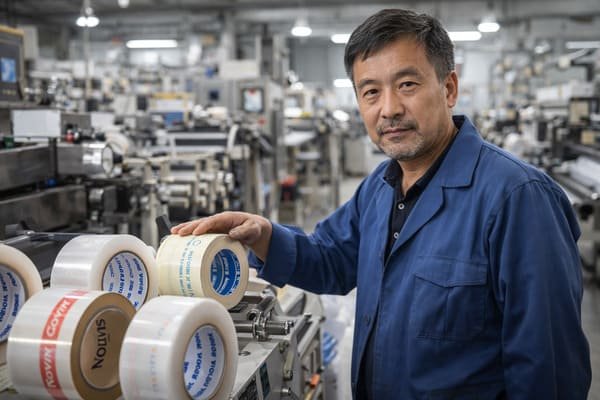
I visited a senior tape supplier in Suzhou today. It was an eye-opening experience. This man is a veteran in the industry. He deals in high-end products like Crown tapes and Sony tapes. He also manages ODM production for his own domestic brands.
He represents a specific group of people. I call them the "Golden Generation4" of Chinese manufacturing. They are mostly between 35 and 40 years old. They started their businesses when China was growing very fast.
Think about the last fifteen years. China became the world's factory. We saw a boom in home appliances. Then came the smartphone explosion. Now, we see the rise of electric vehicles. These industries demand very high-quality tapes. The tapes must hold strong, resist heat, and not leave residue.
The suppliers who served these industries had to be the best. If their tape failed on a smartphone assembly line, they would lose millions. So, they improved their technology every year. They survived the toughest competition.
Here is a breakdown of what makes this generation different:
| Feature | The "Core" Supplier | The Typical Online Trader |
|---|---|---|
| Experience | 15+ years in production | 2-5 years in sales |
| Key Clients | Sony, Foxconn, Auto Brands | Small foreign importers |
| Focus | Product performance & R&D | Marketing & English skills |
| Survival Mode | Survived domestic "Red Ocean" | Relies on information gaps |
I realized something important during my visit. These people are the most competitive players in the global supply chain. They have the best glue formulas5. They have the most efficient machines. But you probably never see them. Why? Because they are busy serving the domestic giants. They focus on making the product, not on building a website in English.
Why do the best manufacturers often lack an international presence?
You might believe that the top suppliers are the ones with the best websites. This is a dangerous assumption. Often, the companies with the best marketing have the weakest products.
There is a huge disconnect in the market. The suppliers with the best technology often do not speak English or understand export rules. The suppliers you find easily usually just have good language skills and the courage to send emails.
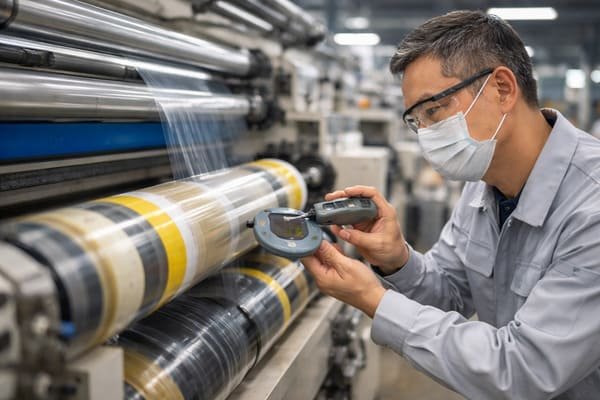
This is a strange reality in China. China is the most developed soil for manufacturing in the world. It is also a "Red Ocean" market. This means the internal competition is brutal. Thousands of factories fight for the same orders. The profit margins are thin. The quality requirements are strict.
If a company survives in this domestic Red Ocean, they are strong. They are the survivors. They have optimized every part of their production. They know how to cut costs without breaking the product. They know how to make glue that sticks in freezing cold or burning heat.
But here is the problem. These survivors often know nothing about foreign trade. They do not know how to ship a container to Europe. They do not know how to use LinkedIn. They do not speak English.
So, who do you meet when you search online? You meet a different group. You meet young trading companies. You meet factories that failed in the domestic market and are trying to find "easy" money abroad.
These people have a clear advantage: they speak your language. They reply to emails fast. They have nice photos. But they do not hold the core technology. They are just messengers.
I see this all the time. A foreign buyer pays a high price. They think they are paying for quality. Actually, they are paying for the English service. The product itself comes from a second-tier factory, or it is outsourced to the real experts I mentioned before. The trader takes a cut, and you get a standard product.
You need to ask yourself a hard question. Do you want a supplier who speaks perfect English? Or do you want a supplier who makes perfect tape? Ideally, you want both. But you must understand that language skill does not equal technical skill.
How can you verify if your supplier holds core resources?
You cannot fly to China for every order. You need a way to test your supplier from a distance. You must find out if they are the real deal.
To verify a supplier, you must move the conversation away from price and delivery dates. You need to ask technical questions6 about the "core resources," such as their adhesive formulation process7 and their raw material sources.
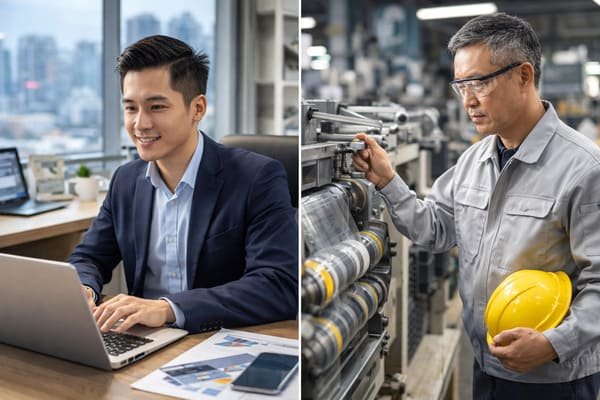
So, how do you find these "hidden champions"? How do you make sure you are working with the core supply chain1? You need to dig deeper. You need to ask questions that a simple trader cannot answer.
I am a manufacturer. I know the process. Real manufacturers love to talk about their machines and their materials. Traders try to avoid these topics.
Here is a strategy for you. When you talk to a Chinese salesman, ask them about the "Three Pillars of Tape Manufacturing8":
- The Glue (Adhesive): Ask them where they get their acrylic or rubber. Ask if they formulate the adhesive in-house. A core supplier usually mixes their own glue to control quality. A trader buys finished glue or finished rolls.
- The Coating: Ask about their coating lines9. Ask about the thickness tolerance. A real expert will tell you they can control thickness within 1 or 2 microns. They will explain how they dry the glue.
- The Slitting: Ask about their capacity to cut custom sizes. Real factories have rows of slitting machines10. They can cut any width you want instantly.
You should also look at their product range11. The "core" guys usually do OEM/ODM for big brands. Ask them if they have done work for electronics companies or automotive companies. These industries have the highest standards. If they can sell to a car factory in China, they can definitely make a good packaging tape for you.
Here is a checklist to help you filter your contacts:
| Signal | Good Sign (Core Supplier) | Bad Sign (Middleman/Weak Factory) |
|---|---|---|
| Response to Tech Questions | Detailed, maybe needs an engineer to help answer | Vague, "we can do everything," or ignores the question |
| Customization | Asks for technical drawings or specific performance data | Just asks for the logo and the size |
| Price Structure | Breaks down cost by material weight and glue type | Gives a flat price per roll without explanation |
| Knowledge | Knows the difference between Bopp and functional tapes | Treats all tapes as just "sticky plastic" |
I am writing this because I want you to find the best products. My business is built on these core capabilities. We do the full process. We do not just buy and sell. When you look for a partner in China, look for the ones who survived the hard times. Look for the ones who hold the technology.
Conclusion
China has the best manufacturing supply chain in the world, but the best suppliers are often hidden. You must look past the language barrier and find the partners who hold the core technology and resources.
Understanding the core supply chain helps you connect with manufacturers who have survived fierce competition and possess superior technology. ↩
Domestic veterans are the true masters of the industry, having grown up during China's manufacturing boom and serving high-demand sectors. ↩
These industries, like automotive and electronics, demand tapes that resist heat and leave no residue, ensuring product reliability. ↩
The Golden Generation represents experienced manufacturers who started their businesses during China's rapid growth, offering high-quality products. ↩
Top manufacturers have the best glue formulas, ensuring their products perform well under various conditions, like extreme temperatures. ↩
Asking technical questions helps verify if a supplier holds core resources and can deliver high-quality products. ↩
The adhesive formulation process is key to ensuring tape quality, as it affects stickiness, durability, and performance. ↩
These pillars—glue, coating, and slitting—are crucial for assessing a supplier's technical capabilities and product quality. ↩
Coating lines determine the tape's thickness tolerance and drying process, impacting its overall quality and performance. ↩
Slitting machines allow for custom tape sizes, showcasing a factory's capability to meet specific customer needs. ↩
A diverse product range suggests a supplier's ability to meet high standards and serve demanding industries like electronics and automotive. ↩