Choosing the wrong industrial tape causes production delays1 and financial loss2. You struggle to balance cost and quality. Here is the inside truth about brand hierarchies3 and pricing systems4.
The industrial tape market has three tiers. Tier 1 brands like 3M offer high stability5 at high prices. Tier 2 offers low prices but inconsistent quality. Tier 3 involves unbranded factories. You must prioritize market-validated brands6 over the lowest price to prevent costly manufacturing failures.
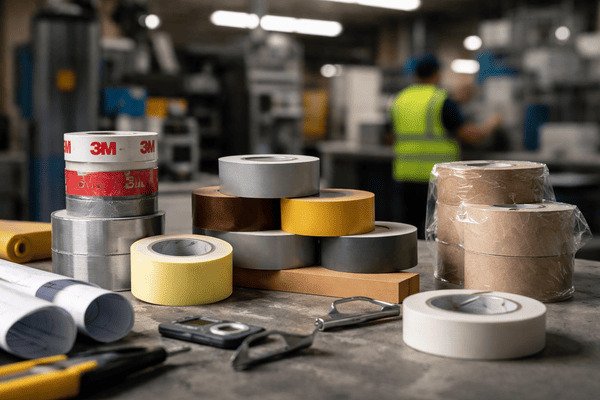
I have seen many buyers make mistakes in this area because they only look at the price tag. Let me explain the details so you do not make the same errors.
5
What Are the Three Main Tiers in the Industrial Tape Market?
You see many prices for the same type of tape. It is confusing to know which one is right for your factory.
The market is divided into high-end brands, aggressive mid-range brands7, and low-end white-label factories8. Your choice depends on whether you need absolute stability for critical parts9 or basic bonding for non-critical packaging10.
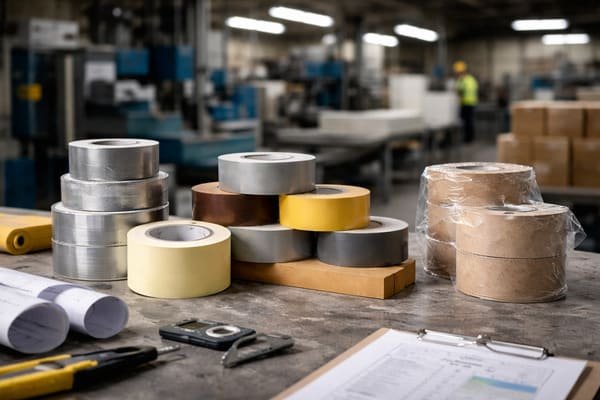
In the industrial tape market, there is always a fight between price and stability. I have been in this industry for a long time. I see that the market is clearly divided into three groups. You need to understand these groups to make the right choice for your business.
The First Tier: High Price and High Stability This tier includes famous international brands like Soken and 3M11. Their prices are high. For example, a roll of Soken tape might cost around ¥20. A roll of 3M tape might cost around ¥25. You might think this is too expensive. However, big companies like Haier, Panasonic, and Supor still choose them. They use these tapes for critical parts9 of their products. They do this because the quality is perfect every time. They have great quality control and after-sales service.
The Second Tier: Aggressive Pricing This tier includes brands like Crown and Jinghua12. Their prices are very low. They try to beat the market. Their prices can go down to ¥5 or ¥10. Sometimes it is even lower. This looks good for your budget. But there is a problem. They have strict cost limits. This means the quality changes often. Their service is not as strong as the first tier.
The Third Tier: White Label Factories These are small factories without a brand name. You often see them in non-standard export orders. They do not have the ability to develop new industrial products. They only make simple tapes for basic sticking needs. They cannot guarantee performance.
I have summarized the differences in the table below to help you compare:
| Tier | Examples | Price Range (Approx.) | Key Feature | Best For |
|---|---|---|---|---|
| 1 | Soken, 3M | ¥20 - ¥25 | High Stability, Great Service | Critical components, big brands |
| 2 | Crown, Jinghua | ¥5 - ¥10 | Aggressive Price, Variable Quality | Cost-sensitive projects |
| 3 | White Label | Very Low | No R&D, Basic Bonding | Simple, non-critical use |
You must decide what is more important. If you are making a high-end electronic device, you cannot risk the tape failing. If you are just sealing a box for local storage, maybe a cheaper option is okay. But for industrial manufacturing, stability is usually worth the extra cost.
The difference in price often comes from the history of the brand in a specific region. Let me tell you a story about how this works in real life.
How Did the Yangzhou Foam Industry Change Its Tape Preferences?
Trust is hard to build and easy to lose in the manufacturing world. This story from Jiangsu province proves that stability wins over price.
The Yangzhou foam market13 shifted from expensive Soken tapes to the cost-effective RS500, and finally to Yongle. This evolution shows that while price matters, a single quality failure can destroy a brand's reputation and lead to immediate replacement.
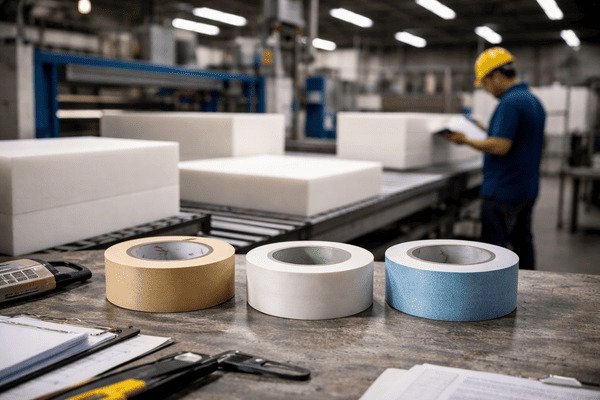
I want to share a specific case study with you. It comes from the foam industry belt in Yangzhou, Jiangsu. This area makes shock-absorbing foam for cars and construction machines. The requirements for industrial tape here are very high. In this specific market, people trust "family-style" recommendations. If one factory says a tape is good, everyone buys it.
The market in Yangzhou went through three clear stages. This history teaches us a lot about how brands rise and fall.
Stage 1: The Rule of Soken (Before 2010) Years ago, Soken was the only choice. Their performance was perfect. No one questioned them. They had a monopoly. But they had a problem. Their price system was very rigid. They did not change their prices for anyone. This made buyers unhappy. It created a chance for Chinese domestic brands to enter the market.
Stage 2: The Rise of Risheng (Shenshan) A company from Ningbo called Shenshan launched a product called RS500. This tape was designed to compete with 3M's 9080 model. The performance was very similar. But the price was amazing. It was only half the price of the big brands. This was a great deal. RS500 became the king of the Yangzhou market for five years. Everyone used it because it offered high value.
Stage 3: The Victory of Yongle Tape14 Domestic tapes often have a hidden weakness. The stability is not always 100%. RS500 had a major failure. A large client had a big problem with the tape quality. The company did not handle the complaint well. They lost the trust of the market very fast. Yongle Tape14 saw this opportunity. They entered the market with a price of about ¥9. Their performance was more stable. They took over the market quickly.
This story shows us a "trust endorsement15" chain.
- Trust is hard to get. You need a good product.
- Price opens the door. RS500 won because it was cheap and good enough.
- Stability keeps the customer. Yongle won because RS500 failed once.
In industrial B2B business, you cannot make mistakes. Once you lose trust, you lose the whole market. This is why we, as a manufacturer, focus so much on consistency. We know that one bad batch can ruin years of hard work.
Now you understand the history and the brands. But how do you choose the right tape for your specific needs?
Why Is Market Validation the Only Standard That Matters?
You might look at a datasheet and think all tapes are the same. This is a dangerous assumption for industrial procurement.
The true value of a tape is not its sticker price but the cost of verification and failure. You should avoid unproven white-label products and choose models that have survived the fierce competition of the Chinese domestic market.
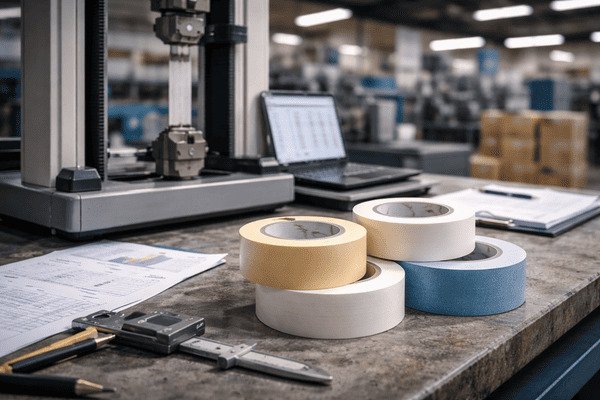
I often tell my clients that the price on the invoice is not the real cost of the tape. The real cost includes the "verification cost16" and the "failure cost17."
Verification Cost This is the time and money you spend to test the tape. You need to know it works. If you buy a cheap tape, you have to test every batch. This takes time. If you buy a reliable brand, you save this time.
Failure Cost This is the most dangerous cost. If a tape fails after you sell your product, you lose a lot of money. You have to recall the products. You lose your reputation. The money you saved on the cheap tape is nothing compared to this loss.
Here are my specific recommendations for selecting industrial tapes:
1. Be Careful with White Label Products In the export market, there are many "white label" tapes. These come from small factories. Unless you are buying from a big brand like Crown or Jinghua that exports directly, be careful. Small factories cannot handle high industrial requirements. Their tapes are fine for simple paper sticking. They are not fine for holding a car part together.
2. Trust Deep Validation The Chinese market is very tough. The competition is fierce. If a tape model survives in the Chinese industrial market for a long time, it is a good sign. It means the tape has passed the test. It has been used in millions of products. It has proven its stability.
3. Look for "Survivor" Models Do not just look for the newest technology. Look for the tape that has been used for five or ten years. These "survivor" models are the safest choice.
I use a simple checklist when I help my clients choose a tape:
- Application: Is this for a critical part? (Yes = Tier 1 or top Tier 2).
- Environment: Will it face heat or moisture? (Yes = Needs deep validation).
- Volume: Do you need millions of meters? (Yes = Stability is more important than price).
The value of industrial tape is hidden. You do not see it until something goes wrong. Therefore, the only standard for selection is market validation. A tape that has been tested by the market is worth more than a cheap tape that is unproven.
Conclusion
Always choose industrial tapes that have passed deep market validation. The cost of one failure in your production line is much higher than the money you save on cheap tape.
Understanding how incorrect tape selection leads to delays can help you avoid costly disruptions in your manufacturing process. ↩
Learn about the potential financial impacts of using unsuitable tape to make informed purchasing decisions. ↩
Explore the different brand tiers to choose the right tape for your specific needs and budget. ↩
Discover how pricing influences tape quality and stability, helping you make cost-effective choices. ↩
Learn why high stability is crucial for critical components in manufacturing. ↩
Find out why choosing market-validated brands can prevent costly manufacturing failures. ↩
Understand the pros and cons of mid-range brands to balance cost and quality. ↩
Explore the risks and benefits of using tapes from white-label factories for non-critical applications. ↩
Ensure the reliability of your products by understanding the importance of tape stability for critical components. ↩
Learn when it's safe to opt for cheaper tapes without compromising product quality. ↩
Discover why top brands like Soken and 3M are trusted for high-stability applications. ↩
Evaluate the cost-effectiveness of Crown and Jinghua tapes for your projects. ↩
Learn from the Yangzhou market's experience to make informed tape choices. ↩
Explore how Yongle Tape capitalized on market opportunities to gain dominance. ↩
Learn how trust and reliability influence tape brand success in the market. ↩
Understand the hidden costs of testing and verifying tape quality before purchase. ↩
Recognize the potential losses from tape failure to prioritize quality over price. ↩