Are you worried about your supply chain being disrupted by global manufacturing shifts? The problem is real, and it could leave your business stranded without a reliable partner.
Yes, the adhesive tape supply chain1 is shifting away from mainland China. Many traditional suppliers2 lack the language skills3 and global experience4 to follow their clients abroad, creating significant risks for businesses that are expanding into new regions5 like Vietnam.
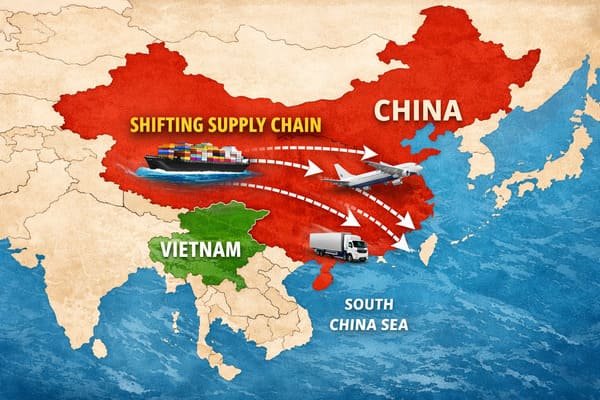
I see this happening firsthand. Just yesterday, I was visiting a client, a local tape trader here in China. We were talking about the big trend everyone in manufacturing is discussing: the move to Vietnam. He told me his biggest customer, a brand you'd probably recognize, invited him to set up a supply hub for them in Vietnam. It was a golden opportunity. But he turned it down. The thought of navigating a new country, a new language, and a new system was too much for him. This story isn't unique. It's a widespread issue that could directly impact your business if you're not prepared. Let's explore what this means for you.
Why Are Many Chinese Suppliers Hesitant to Go Global?
You have a great relationship with your supplier, but they seem stuck. They can't support your new factory in another country. It's frustrating and puts your operations at risk.
Many traditional Chinese suppliers hesitate to expand globally due to significant barriers. These include a lack of English proficiency, no overseas business experience, and a deep reliance on their domestic network6. For them, the risk and uncertainty of going abroad feel much greater than the potential rewards.
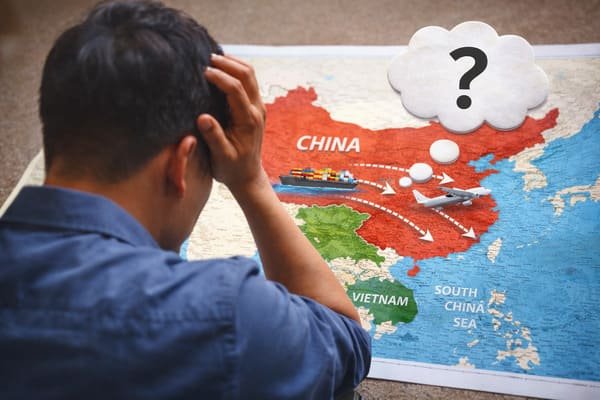
The client I met yesterday is a perfect example. He's incredibly successful within China. He knows everyone, can source anything, and has a supply chain that runs like clockwork. But when his customer asked him to replicate that in Vietnam, he hit a wall. It wasn't about a lack of desire to help; it was a genuine fear of the unknown. We talked for hours, and I realized his concerns fall into a few key areas that many suppliers face. First, the language barrier is huge. It's not just about ordering coffee; it's about negotiating contracts and discussing technical specifications. Second, the business culture7 is completely different. Navigating foreign laws8, labor, and taxes without experience is a massive gamble. Finally, their biggest asset is their local network, which becomes worthless overnight in a new country. They would be starting from scratch, just like a brand new company. It's a pity because their domestic expertise is top-notch, but it's locked within China's borders.
| Supplier Type | Domestic-Focused Trader | Globally-Minded Manufacturer |
|---|---|---|
| Primary Strength | Deep domestic network6 & relationships | In-house production & technical expertise |
| Language Skills | Primarily local language | Multilingual teams (incl. English) |
| International Experience | Limited to non-existent | Proven record of international logistics |
| Flexibility | Low; tied to one location | High; can explore new production options |
| Risk Profile | Prefers stable, known domestic market | Sees global shifts as growth opportunities |
What Risks Do You Face When Your Supplier Can't Adapt?
Your business is growing and expanding into new markets. But what happens when the partners who helped you grow can't make the journey with you? Their problem quickly becomes your crisis.
When your tape supplier can't adapt to your global expansion, you face serious risks. These include broken supply chains, inconsistent product quality from new vendors, increased logistical costs, and a frustrating loss of the customized solutions you depend on. Your competitive advantage is at stake.
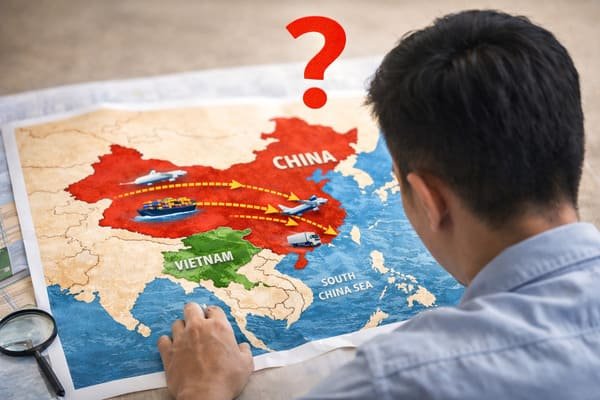
Imagine this scenario. Your company makes the strategic decision to move a production line to Vietnam to be closer to other partners and save on costs. You call your trusted tape supplier in China to arrange shipments to the new factory. But they can't do it effectively. The shipping costs are higher than you thought, and the lead times are unpredictable due to complex customs clearance. You are forced to find a local tape supplier in Vietnam quickly. Now, you're starting from zero. You have to vet a new company, send samples back and forth, and hope they can match the specific adhesive formula you've spent years perfecting with your Chinese partner. The first few batches from the new supplier are inconsistent. Some rolls are perfect, others fail quality control, causing your production line to stop. This is the reality you face when your supplier's capabilities don't grow with yours. The efficiency you gained by moving is lost to supply chain chaos9.
| Aspect | Before: With an Aligned Supplier | After: With a Non-Adaptive Supplier |
|---|---|---|
| Logistics | Simple, direct shipment to one location. | Complex, multi-country shipping; customs issues. |
| Quality | Consistent, reliable, and to your spec. | Inconsistent; forced to use new, unvetted vendors. |
| Cost | Predictable and stable. | Volatile; includes new shipping and import taxes. |
| Communication | Streamlined with one trusted partner. | Fragmented between your team and multiple suppliers. |
How Can You Future-Proof Your Adhesive Tape Supply Chain?
You see the writing on the wall and know you need a more resilient strategy. How do you find a partner who won't just keep up but will help you lead the way?
To secure your supply chain, you must partner with a true manufacturer, not just a trader. Choose a supplier with strong OEM/ODM development capabilities10 and a clear global vision. They see your international expansion not as a problem, but as a shared opportunity for growth.
The key is to understand the difference between a supplier who sells tape and a partner who makes tape. My client, the trader, is an expert at selling. But we are a manufacturer. We control everything from the chemical formula of the adhesive to the thickness of the film and the final cut of the roll. This makes a world of difference. Because we have in-house technical teams and full process control, we have the ability to replicate our quality and standards anywhere. If a key partner like you decides to move production to Vietnam, our first question isn't "Can we ship there?" but "Does it make more sense to set up a production line there for you?" An OEM/ODM manufacturer is invested in your product, not just your orders. We have English-speaking engineers and logistics experts who are already analyzing these global trends. We're not waiting for an invitation; we are actively preparing to support our clients' growth, wherever it takes them.
What Key Qualities Define a Future-Ready Tape Manufacturing Partner?
You're ready to find a new partner, but everyone's website says the same thing. How do you identify a manufacturer who is genuinely prepared for the future, not just saying the right words?
A future-ready partner11 is defined by tangible capabilities. Look for in-house manufacturing12, a dedicated OEM/ODM team13, proven international logistics experience14, and a scalable production model15. These are the pillars that ensure your supply chain remains stable and efficient, no matter where you operate.
When you evaluate a potential partner, you need to dig deeper than their product catalog. Ask them about their process. A true manufacturer will be able to walk you through every step, from raw material sourcing to quality control testing. We, for example, pride ourselves on our in-house control, which allows us to guarantee consistency. Next, ask about their OEM/ODM team. Is it just one person, or is it a department of engineers and project managers? A dedicated team shows a real commitment to custom solutions. They are the ones who can take your unique requirements and ensure they can be produced to the same standard in a new facility. Also, demand proof of their international experience. Ask for case studies or references from clients they support across different countries. Finally, discuss scalability. We don't just think about your order today; we plan for your needs three to five years from now. A partner who discusses capacity expansion and regional strategy is a partner who is ready for the future.
Supplier Evaluation Checklist
| Quality | What to Ask | Ideal Answer |
|---|---|---|
| Manufacturing Control | "Do you manufacture in-house or outsource?" | "We control the full process from start to finish." |
| OEM/ODM Team | "Can I speak with one of your engineers?" | "Yes, our R&D team would love to discuss your project." |
| Global Logistics | "Share an example of a complex international shipment." | They provide a specific story with challenges and solutions. |
| Scalability | "How would you support us if our volume doubles?" | They discuss their capacity expansion plans. |
| Future Vision | "What is your strategy for the shift to SE Asia?" | They have a clear, proactive plan, not a reactive one. |
Conclusion
The global manufacturing landscape16 is shifting. To protect your business, you need more than a supplier; you need a manufacturing partner17 who is ready and able to grow with you.
Understanding the shifts in the adhesive tape supply chain can help you anticipate changes and adapt your business strategy accordingly. ↩
Learn why traditional suppliers face challenges in global markets to better assess your own supply chain vulnerabilities. ↩
Explore how language skills can be a barrier or a bridge in international business, affecting your global operations. ↩
Discover the importance of global experience in suppliers to ensure they can support your international growth. ↩
Gain insights into the challenges of expanding into new regions to better prepare your business for international growth. ↩
Understand how a strong domestic network can become a limitation when expanding globally, impacting your supply chain. ↩
Learn about the differences in business culture to navigate international markets more effectively. ↩
Explore the complexities of foreign laws to better manage international operations and compliance. ↩
Identify the factors leading to supply chain chaos to mitigate risks during your business's global expansion. ↩
Understand the significance of OEM/ODM capabilities in suppliers to ensure they can meet your custom product needs. ↩
Identify the key qualities of a future-ready partner to ensure your supply chain remains resilient and adaptable. ↩
Explore the benefits of in-house manufacturing to ensure consistent quality and control over your products. ↩
Learn how a dedicated OEM/ODM team can provide custom solutions and support your unique product requirements. ↩
Learn how international logistics experience can enhance a supplier's ability to support your global operations. ↩
Discover the benefits of a scalable production model to ensure your supplier can grow with your business. ↩
Stay informed about changes in the global manufacturing landscape to adapt your business strategy effectively. ↩
Find out what to look for in a manufacturing partner to ensure they can support your business's growth and expansion. ↩